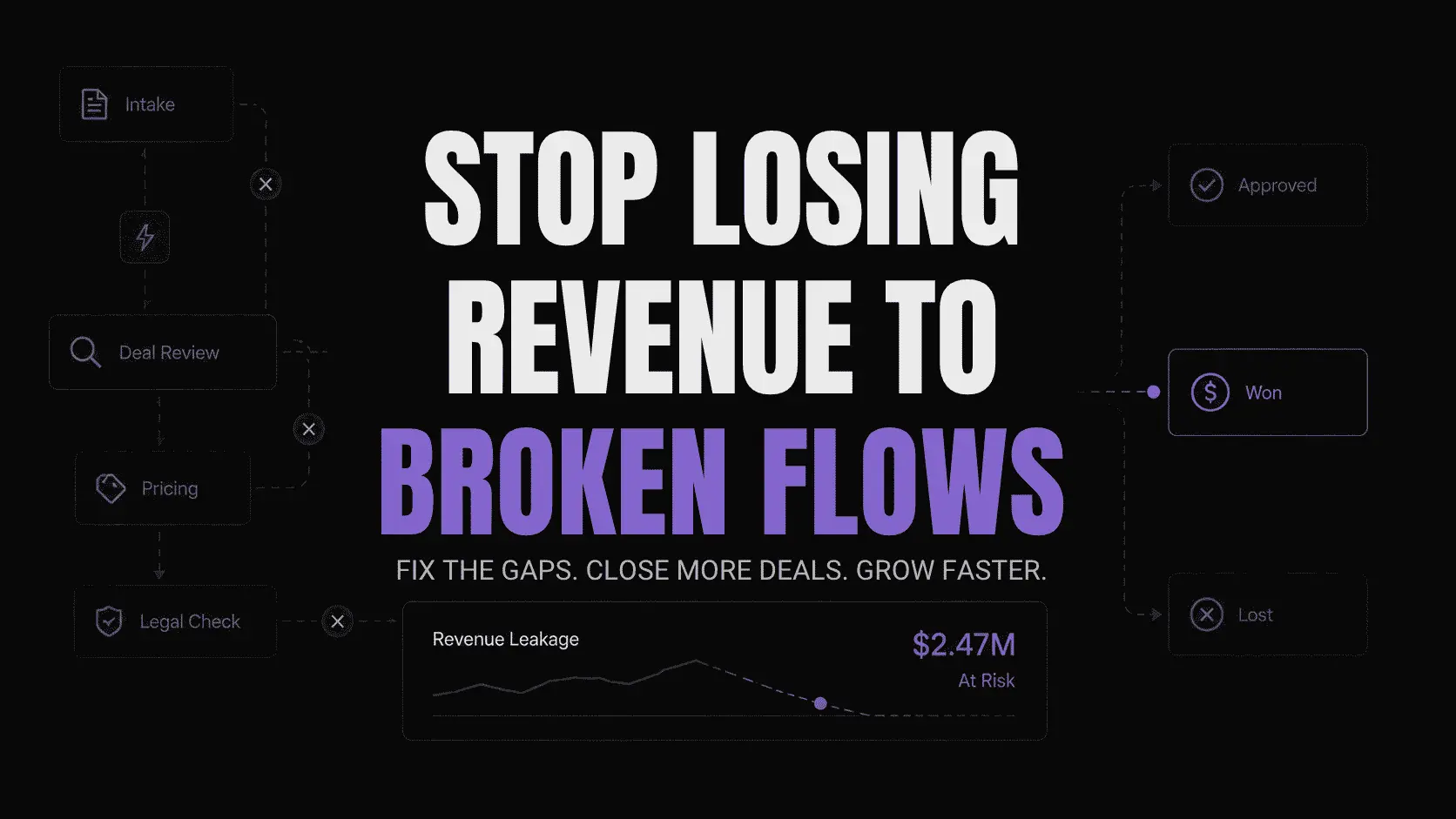
Revenue leakage from fragmented deal desk workflows is quietly draining your bottom line because your deal architecture is broken across engineering, sales, and finance.
Key takeaways
- Revenue loss stems from disconnected data systems rather than poor sales performance.
- Fragmented quote-to-cash systems hide pricing non-compliance from leadership view.
- Manual data replication between CRM and billing introduces silent ledger errors.
- Operational clarity must precede any automated system integration.
Every technical SaaS founder knows the pain of watching engineering velocity stall because of technical debt. Yet few notice the exact same structural decay happening inside their commercial engines until margins begin to shrink. The same thing happens in healthcare AI implementation, where small workflow gaps become expensive over time. You assume your margin dip is a pricing pressure problem or a sales execution issue. But it is usually something far more boring and insidious.
A recent global study by EY Global Insights found that an astonishing 90% of organizations experience some form of revenue leakage, often driven by systemic breakdowns in how data flows between internal systems. Compounding this, classic research published by the Harvard Business Review shows that the highest performing leadership teams succeed not through sheer sales volume, but by optimizing internal automation and data procedures to eliminate operational drag. When your pricing spreadsheets, Slack approval threads, and CRM data fields do not talk to each other, money evaporates. Your sales reps are not losing deals to competitors. Instead, your administrative systems are dropping dollars through the floorboards during the handoff from quote to provisioning.
What I’ve noticed working with businesses is that founders love to solve operational friction by buying another SaaS subscription. They see a broken approval chain and immediately purchase an AI assistant to summarize Slack channels. But adding a thin layer of machine learning over a fundamentally broken database architecture just generates expensive, automated chaos. Most businesses do not have an AI problem. They have a workflow and process problem that AI exposes faster. This systemic failure represents a core issue within failed AI adoption, where tools are deployed onto broken operational foundations.
The structural anatomy of revenue leakage from fragmented workflows
When you are small, custom enterprise deals are handled via manual adjustments. You slack your head of engineering about a custom API limit, type the discount into an email, and copy-paste the contract into a DocuSign template. This informal method works perfectly until you pass your first few million in ARR.
At scale, that informality mutates into operational debt. The sales rep promises an unreleased feature to close a quarter-end contract. Meanwhile, the finance team bills the client based on a legacy pricing tier because nobody updated the master ERP ledger. This structural breakdown forces teams into shadow operations, where individual reps build hidden workarounds because the core system configuration has completely stopped working.
Pause and think: Look at your last three enterprise contracts. Can you trace the exact line-item pricing from the initial sales pitch deck directly into your production database without finding a single manual override or Slack-based verbal agreement?
If you find even one discrepancy, you are leaking cash. Data fragmentation causes forecasting models to skew, leaving your leadership team guessing about actual capital allocation. Without a reliable backend, teams find themselves trapped by too many AI tools acting as disjointed point solutions rather than cohesive systems.
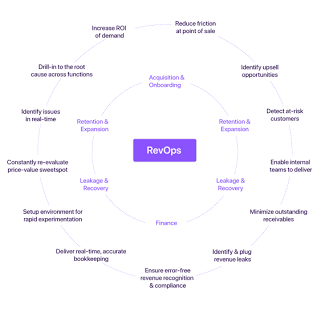
Modern RevOps infrastructure tool mapping
To fix a fragmented revenue architecture, you must map specific operational failures to dedicated infrastructure layers. The table below outlines how traditional, fragmented processes contrast with a unified, systems-first revenue operation.
| Fragmented approach (The leakage pattern) | Systems-first approach (The unified pattern) |
| Pricing structures are maintained inside individual sales rep spreadsheets. | Pricing guardrails are hardcoded into an automated configuration engine. |
| Deal approvals happen via ad-hoc Slack messages and informal verbal agreements. | Approval logic is sequentially enforced through verifiable system state changes. |
| Usage data is manually extracted by engineering for monthly finance billing. | Metered telemetry data flows directly from the application into the billing ledger. |
| Customer success teams manually review contract PDFs to check for expansion milestones. | System alerts trigger automatically based on real-time contract expiration dates. |
Stopping revenue leakage from fragmented workflows operationally
Let us look at a clean, systemic workflow operating at 9:00 AM on a Tuesday. A sales representative needs to configure a complex, multi-tiered enterprise quote for a client requiring custom API limits.
Configuration and generation stage
DealHub

DealHub
DealHub is a CPQ and revenue management platform that helps sales teams create accurate quotes, manage approvals, streamline contracts, and accelerate deal execution. It is designed for companies with complex pricing models, multiple sales workflows, and revenue operations teams that need better control over the quote-to-revenue process.
The real bottleneck in quoting isn’t typing the numbers; it’s the hidden variations reps introduce when a prospect asks for a custom tier. DealHub acts as a structural boundary directly inside your CRM. Instead of letting reps copy-paste pricing parameters from a desktop spreadsheet, it forces them to assemble quotes using hardcoded, pre-validated infrastructure blocks. If a rep attempts to drop the price per API call below your gross margin floor, the system locks the state change until finance generates a cryptographic token. It replaces human compliance checks with database constraints. It also avoids the spreadsheet workflow failures that happen when pricing rules live outside the CRM.
Forecasting and conversation execution stage
Clari

Clari
Clari is a revenue intelligence platform that helps sales and revenue teams improve forecasting accuracy, understand pipeline health, and make data-driven decisions. It connects customer-facing activity data across CRM and sales tools to provide visibility into revenue performance and deal execution. (clari.com)
Sales forecasting fails because it typically relies on rep optimism typed into text fields on a Friday afternoon. This platform ingests live data directly from your system logs and communication channels to eliminate manual sales forecasting. Instead of letting clean projections get skewed by guessing games, it maps exact buyer engagement metrics against historical closed-won patterns. Consequently, technical leaders get an objective view of future cash flow based on system usage rather than sales rep optimism.This data layer forms a vital pillar of your overall AI workflow infrastructure, preventing data isolation.
Terret

Terret
Terret is an AI-powered revenue intelligence platform that helps sales, customer success, and revenue teams automate revenue workflows, improve forecasting, and execute deals more efficiently. It uses AI Revenue Agents to analyze revenue data, identify risks, automate repetitive tasks, and support teams across the entire go-to-market lifecycle.
When deal lifecycles stretch across engineering scoping, product trials, and multi-department evaluations, context fragments immediately. This infrastructure layer scans cross-channel revenue execution data to highlight hidden renewal risks before they hit the balance sheet. Instead of allowing long enterprise contracts to sit in an unmonitored administrative blind spot, it tracks account telemetry and flags changes in buyer behavior. As a result, your account managers can intervene weeks before an enterprise client decides to churn. Maintaining this structural predictability directly impacts your long-term AI workflow maintenance scheduling.
Attention
Attention
Attention is an AI-powered conversation intelligence platform that helps sales teams capture, analyze, and automate customer conversations. It connects voice and communication data with sales workflows to help teams improve productivity, coaching, and revenue execution.
The handoff between a technical scoping call and an enterprise contract draft is usually where custom requirements vanish. Reps frequently forget to log specific data residency requests or bespoke SLA commitments, leading to massive billing disputes during onboarding. Instead of relying on manual summaries, Attention extracts structured configuration data directly from raw customer conversations. It automatically populates CRM fields based on specific technical requirements mentioned during scoping calls. This eliminates the risk of human error during manual data entry after a long sales call, directly preventing the buildup of AI operational debt inside your commercial systems.
Compensation and incentive alignment stage
Qobra

Qobra
Qobra is a sales commission management platform that helps companies automate commission calculations, improve transparency, and give sales teams real-time visibility into their earnings. It replaces manual spreadsheets and disconnected commission workflows with an automated incentive management system.
This ledger system automates complex commission calculations by tying payouts directly to verified cash receipts rather than unverified CRM pipeline stages. It syncs commission tracking directly with your accounting backend. But it completely removes spreadsheets from the incentive calculation equation.
Check your revenue operational health
Before investing in new infrastructure, you need to understand exactly where your data pipeline is broken. Use this brief checklist to evaluate your current business operations:
- [ ] Custom contract amendments update your central billing system automatically without human intervention.
- [ ] Engineering and finance reference the exact same database field for customer usage metrics.
- [ ] Sales commissions decrease automatically if an enterprise customer cancels their contract within the first ninety days.
- [ ] Historical pricing data remains completely accessible even if your top account executive leaves the company tomorrow.
If that last point feels risky, you’re dealing with an organizational knowledge problem, not just a billing one.
How information siloes mutate into margin drops
The text-box pipeline below maps the direct chain reaction between a fragmented dataset and actual financial loss.
┌────────────────────────────────────────┐
│ Scattered Pricing & Deal Metrics │
└────────────────────────────────────────┘
│
▼
┌────────────────────────────────────────┐
│ Siloed Platform Communication │
└────────────────────────────────────────┘
│
▼
┌────────────────────────────────────────┐
│ Cross-Department Approval Delays │
└────────────────────────────────────────┘
│
▼
┌────────────────────────────────────────┐
│ Inaccurate Pipeline Visibility │
└────────────────────────────────────────┘
│
▼
┌────────────────────────────────────────┐
│ Forecasting Errors & Margin Drops │
└────────────────────────────────────────┘
Frequently asked questions
How does workflow fragmentation directly cause actual revenue leakage?
When system data is scattered across multiple unlinked applications, human errors multiply quickly. Reps write incorrect line items, billing teams miss expansion triggers, and finance teams under-invoice because they lack visibility into custom contract clauses.
Can we just fix this by enforcing stricter manual review processes?
Manual reviews simply add human drag to an already broken system. People get tired, miss details, and bypass rules to close deals quickly under pressure. True operational safety requires automated system guardrails rather than longer human checklists.
Why should a technical founder care about RevOps infrastructure early on?
Commercial technical debt compounds much faster than software code debt. Building a scalable product on top of a chaotic billing architecture makes it incredibly difficult to introduce consumption-based pricing models later down the road.
What is the biggest mistake teams make when deploying new RevOps tools?
They try to automate their existing chaotic habits. If your pricing strategy is messy, buying a modern quoting tool simply allows your team to generate incorrect proposals at five times the speed.
How do we connect engineering metrics to our financial billing software cleanly?
You must establish a single, unalterable database table as your source of truth for usage data. Your commercial billing platforms should read directly from this database via read-only APIs rather than relying on manual file exports.
The structural shift in SaaS margin control
The era of ignoring leaks because your pipeline is huge is over. When capital gets expensive, market valuation isn’t driven by top-line growth alone; it’s driven by how much of that growth actually makes it to the bank without getting stuck in a broken spreadsheet handoff.
What I’ve noticed working with businesses is that founders treat back-office data friction like an administrative annoyance. But it’s an executive problem. If your systems allow sales reps to verbally customize agreements without hardcoding those rules into the ledger, you aren’t running a scalable software company. You’re running a heavy service agency wrapped in an expensive tech stack.
Are your billing systems actually tracking your contract boundaries, or are you just trusting that everyone remembers what they promised on Slack?
Your next move
Pick one enterprise account that renewed last quarter. Pull up their signed contract PDF in one window and your actual database production logs in the other. Compare the API or user limits they are consuming against what they are actually paying for on their last invoice. If you find even a ten-dollar variance or an unlogged discount, freeze your tool acquisition budget and map your system architecture from scratch before the week ends.