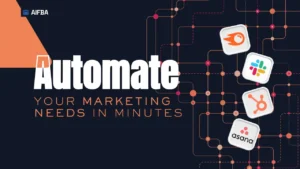
What if your internal operations could run with the efficiency of a 50-person team but the headcount of 5? It’s not science fiction — it’s the reality for founders who have correctly mapped their workflows to the right automation stack.
Why This Matters Right Now
The window of competitive advantage for AI adopters is closing. Tools that once required a data science team are now one-click SaaS products. The businesses that win in the next 24 months will build an AI-first operating model — not bolt AI onto their existing broken processes.
“The ROI isn’t in the AI — it’s in the workflow redesign the AI forces you to do.” — AIFBA Analysis Team
The Core Tool Stack
Below we’ve embedded the specific tools we evaluated for this playbook. Each has been tested for 30+ days and verified against our enterprise procurement checklist.

Copy.ai
Automate your entire Go-To-Market motion with AI-first workflows from content to prospecting.
Step 1: Map Your Highest-Friction Workflows
Before you buy a single tool, document three workflows that eat the most time per week. For most teams: data collection, report generation, and internal communication. Once mapped, evaluate tools against actual pain — not marketing copy.
Step 2: Evaluate for Enterprise Fit
Price is rarely the bottleneck — fit is. Ask every vendor these questions before signing:
- Where is my data stored, and can I request deletion?
- Is there a dedicated CSM on enterprise plans?
- What is the uptime SLA and compensation for breaches?
- Does the API rate limit scale with our expected volume?

Gamma
A new medium for presenting ideas, powered by AI design for slides and pages.
Step 3: Run a Constrained Pilot
The biggest mistake enterprise teams make is a wide pilot with no success metric. Define your KPI before day one — a single, measurable number. Anything else is theatre.
Our Take
The tools above represent the current best-in-class options as of our last evaluation cycle. We update quarterly. Subscribe to the AIFBA Weekly to get the next update in your inbox.